
What to Expect From Move-In Cleaning: 2026 Guide

Table of Contents
What to Expect From Move-In Cleaning: The Basics
Move-In Clean vs. Regular House Cleaning
What Is Included in a Move-In Clean?
What Is Usually Excluded
Your Move-In Cleaning Checklist, Room by Room
Kitchen
Bathrooms
Living Areas and Bedrooms
How Long Does Move-In Cleaning Take?
The Order of Operations
Per-Area Time Estimates
What to Clean Before Furniture Arrives
When Time Is Tight
Move-In Cleaning Tips: Products, Tools, and Surface-Safe Methods
DIY vs. Hiring a Professional Move-In Cleaning Service
A Decision Framework
DIY vs. Professional at a Glance
What a Standard Clean May Not Include
When to Call a Specialist Instead
Frequently Asked Questions
Last Updated: October 12, 2026
What to Expect From Move-In Cleaning: The Basics
Move-in cleaning is a deep, top-to-bottom clean of an empty home before your furniture and boxes arrive. It goes far beyond a regular tidy-up. This guide from Adorn & Polish covers exactly what to expect from move-in cleaning, from the first wiped cabinet to the final vacuum pass.
Here's the short version: a move-in clean resets a space someone else lived in. You get a fresh start without scrubbing a stranger's grease off the stove hood.
Move-In Clean vs. Regular House Cleaning
A move-in clean is not the same as routine house cleaning. Regular cleaning maintains a home that's already clean. Move-in cleaning fixes a home that's been left behind.
The difference comes down to three things:
Scope: Move-in cleans cover inside cabinets, appliances, and closets. Regular cleans usually skip these.
Timing: Move-in cleaning happens once, before you unpack. Regular cleaning repeats weekly or monthly.
Depth: Move-in cleaning targets buildup from the previous occupant, not just this week's dust.
Think of it as turnover cleaning for a home, the same reset short-term rental hosts rely on between guests. The goal is a true clean slate.
Key Takeaway A move-in clean is a one-time deep reset of an empty home. If your place is already clean and furnished, you need regular cleaning, not this service.
What Is Included in a Move-In Clean?
A standard move-in clean includes deep cleaning of every room, inside and out. That means cabinets, drawers, appliances, fixtures, and floors get full attention. The home is empty, so cleaners can reach everything.
Clean My Space
Most professional move-in cleans cover:
Kitchen deep cleaning, including inside the oven and microwave
Bathroom cleaning and sanitizing of tubs, showers, toilets, and sinks
Wiping countertops, sinks, and other surfaces
Cleaning inside cabinets and drawers
Dusting fixtures, doors, baseboards, and other high-touch areas
Vacuuming and mopping all floors
Wiping windows, blinds, and light fixtures
What Is Usually Excluded
Move-in cleaning has limits, and knowing them prevents surprises. Common exclusions include:
Inside walls or wall cavities
Ceiling and exterior window washing above reach
Carpet shampooing or stain removal beyond vacuuming
Pest control or mold remediation
Paint, adhesive, or construction debris removal
Many services offer these as optional add-ons. Ask before booking so your quote matches your expectations.
Watch Out Skipping the walkthrough before booking is the most common mistake. Point out the oven, the blinds, and any pet hair on day one. Unlisted items often become add-ons later, which changes your final bill.
Your Move-In Cleaning Checklist, Room by Room
A room-by-room checklist keeps a move-in clean organized and nothing gets missed. We use this order because it moves from dirty to clean and top to bottom. That way, dust and drips fall onto surfaces you haven't cleaned yet.

Kitchen
The kitchen takes the most time in any move-in clean. Grease and food residue hide in places you'd never check on a normal day.
Wipe inside all cabinets and drawers
Clean the oven, stovetop, and microwave inside and out
Degrease the range hood and backsplash
Sanitize the sink and scrub the faucet base
Wipe the fridge inside and out, including seals
Clean countertops and the dishwasher front
Bathrooms
Bathrooms need real sanitizing, not just a wipe down. This is where disinfecting matters most.
Scrub and disinfect the toilet, including the base and behind it
Clean the bathtub, shower, and tile grout
Descale the showerhead and faucets
Wipe the vanity, mirror, and medicine cabinet
Sanitize all high-touch surfaces like handles and light switches
Living Areas and Bedrooms
Living spaces are mostly dust and floors, but the details matter. Corners and cobwebs get attention here.
Dust light fixtures, ceiling fans, and blinds
Wipe doors, door frames, and switch plates
Clean baseboards and windowsills
Vacuum carpets and mop hard floors
Clear cobwebs from corners and closets
How Long Does Move-In Cleaning Take?
The exact time a move-in clean takes depends on size, condition, and how many cleaners are on the job. But the more useful question is when each part of the clean happens, because sequence determines whether you finish efficiently.
The Order of Operations
Professional move-in cleans follow a top-to-bottom, back-to-front sequence so dirt falls onto surfaces that haven't been cleaned yet. A common pattern is:
Dry work first. Dust ceiling fans, light fixtures, corners, cobwebs, vents, and blinds. Dry dusting before any wet work keeps you from smearing mud across clean surfaces.
Inside cabinets and drawers. Empty them, wipe the interiors, and let them air dry while you move on.
Appliances. Oven, microwave, fridge, and dishwasher interiors. These need dwell time for degreasers, so start them early and return to wipe.
Wet work in kitchens and bathrooms. Sinks, tubs, showers, toilets, tile, and grout. This is the slowest phase because of scrubbing and rinse cycles.
Surfaces and fixtures. Countertops, backsplashes, mirrors, switch plates, door frames, and hardware.
Floors last. Vacuum carpets, then mop hard floors. Floors are always the final step because everything above them has already dropped its dust.
Per-Area Time Estimates
Area | Typical Time |
Kitchen (cabinets, appliances, sink, counters) | 60-90 minutes |
Bathrooms (each) | 30-45 minutes |
Bedrooms and living areas (dusting, baseboards, windowsills) | 45-75 minutes total |
Floors (vacuum and mop) | 30-45 minutes |
Final walkthrough and touch-ups | 15-20 minutes |
Heavy buildup, pet hair, or a long-empty home adds time. A home that sat vacant for months usually needs more work than one cleaned last week, and grease that has baked onto an oven hood can double the kitchen phase on its own.
What to Clean Before Furniture Arrives
Everything. A move-in clean only works if the home is empty. Once boxes and furniture are in place, cleaners can't reach inside closets, behind appliances, or under beds, and those are the areas that matter most in a move-in reset. If you can only clean part of the home before the movers arrive, prioritize in this order:
Kitchen and bathrooms (health and hygiene)
Inside cabinets, closets, and drawers (where your belongings will sit)
Floors (hard to redo once furniture is down)
Bedrooms and living areas (dusting and detail work)
When Time Is Tight
If you have a single afternoon, skip the cosmetic details and hit the surfaces that affect daily life: appliance interiors, sinks, toilets, tubs, countertops, and floors. Baseboards, blinds, and light fixtures can wait a week without harming anything.
Pro Tip Book your move-in clean for the day before your movers arrive. The home is empty, so cleaners reach every corner, and you walk into a fresh space instead of a dusty one.
Move-In Cleaning Tips: Products, Tools, and Surface-Safe Methods
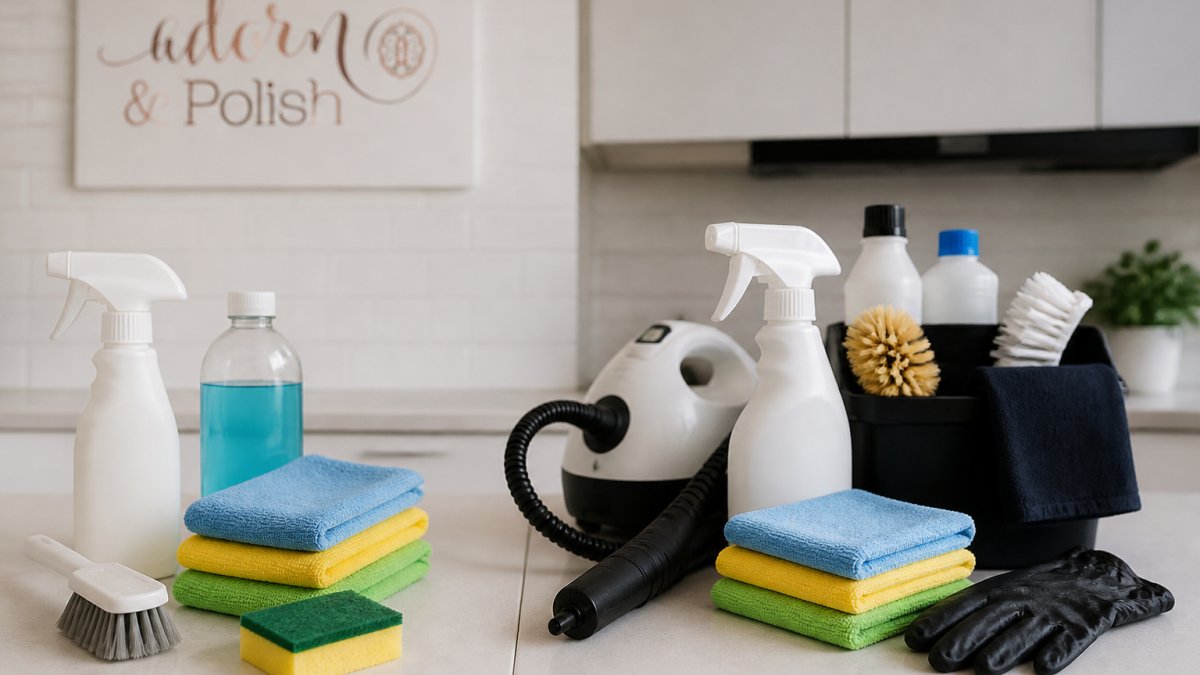
The right products matter as much as the effort. The wrong cleaner can dull a finish or leave streaks that show up in daylight.
Match your product to the surface:
Glass and mirrors: a streak-free glass cleaner and a microfiber cloth
Stainless steel: a dedicated steel cleaner, wiped with the grain
Granite and stone: a pH-neutral cleaner, never vinegar or acid
Wood cabinets: a damp cloth with mild soap, then dry right away
Tile and grout: a soft brush and a gentle bathroom cleaner
Eco-friendly products work well when you give them a moment to sit. Let them dwell on grease and grime before you wipe. That dwell time is what makes green cleaners effective for most jobs.
For health and safety, wear gloves in the bathroom and kitchen. Ventilate the space when using any strong product. Keep pets and kids out until surfaces are dry.
DIY vs. Hiring a Professional Move-In Cleaning Service
Hiring a professional move-in cleaning service saves time and delivers a more consistent result. DIY saves money but costs you a full day or more. The right choice depends on your time, your home's condition, and your standards.
A Decision Framework
Work through these four questions before you decide:
1. How much time do you actually have? A DIY move-in clean can take a significant amount of time. If your move is in 48 hours, DIY may not be a real option.
2. What condition is the home in? A lightly used home that was cleaned recently is DIY-friendly. A home with baked-on oven grease, soap scum buildup, pet odor, or months of dust is not, because those jobs need dwell time, repeated passes, and sometimes specialty products.
3. What equipment do you have access to? Professional crews arrive with extendable dusters, HEPA vacuums, squeegees, grout brushes, and commercial degreasers. If your supplies are still in a moving box, factor in a supply run.
4. What access do you have? Empty homes are the easiest to clean. If the previous occupant's belongings are still there, or if you're cleaning around your own packed boxes, both DIY and professional cleans get harder and slower.
DIY vs. Professional at a Glance
Factor | DIY | Professional |
Time investment | 6-10+ hours for one person | 2-5 hours with a crew |
Equipment | Whatever you own or buy | Commercial-grade tools and products |
Consistency | Varies with your energy and skill | Standardized checklist |
Physical demand | High (ladders, scrubbing, bending) | Handled by the crew |
Best for | Small, lightly soiled homes | Large, heavily soiled, or time-pressed moves |
What a Standard Clean May Not Include
Scope boundaries matter more than most people expect. A standard move-in clean typically does not cover:
Carpet extraction or shampooing. Vacuuming is standard; deep carpet cleaning is usually a separate service.
Exterior windows or anything above reach. Interior glass and sills are common; second-story exteriors usually are not.
Heavy buildup or post-construction debris. Paint splatter, adhesive, drywall dust, and renovation residue often require a specialized clean.
Hazardous materials. Mold, pest infestations, biohazards, and lead or asbestos concerns call for licensed remediation, not routine cleaning.
Wall washing. Spot cleaning is common; full wall washing is usually an add-on.
Confirm scope in writing before booking. Ask specifically about the oven interior, inside the fridge, blinds, baseboards, and whether floors include mopping or only vacuuming.
When to Call a Specialist Instead
Some situations fall outside routine cleaning entirely. If you see active mold growth, evidence of pests, or signs of water damage, stop and bring in a licensed remediation professional. Cleaning over those problems can spread contamination or hide a larger issue.
At Adorn & Polish, our background-checked cleaners handle move-in and move-out cleaning across the Washington Metro Area. We use eco-friendly products, offer seamless online booking, and take secure card payment with no cash needed. An authorization hold is placed on your card the morning of service, and your card is charged after the cleaning is done.
Frequently Asked Questions
What does a move-in clean consist of?
A move-in clean covers the areas a regular cleaning skips. Expect inside cabinets and drawers, appliance interiors including the oven and microwave, inside the fridge, baseboards, window tracks, blinds, light fixtures, vents, and full bathroom sanitizing of tubs, showers, and toilets. Floors get vacuumed and mopped last so no dust settles on finished surfaces. Empty rooms make every surface reachable, which is why scheduling before furniture arrives gives the best results.
How long does a move-in cleaning take?
The time a move-in cleaning takes depends on factors such as square footage, number of bathrooms, how dirty the home was left, and whether the space is empty. Homes with heavy buildup or multiple bathrooms can take longer. Booking before your furniture arrives shortens the job and improves the result.
Should a house be empty before a move-in cleaning?
Yes, whenever possible. An empty home lets cleaners reach baseboards, closet floors, and the spaces behind appliances without moving your belongings. It also prevents dust from settling on furniture you just placed. If you cannot fully empty the house, clear countertops, closets, and floors in the rooms being cleaned, and flag any items that need special handling when you book.
What should I do before the cleaners arrive?
Remove valuables, secure pets, and clear personal items from surfaces you want cleaned. Confirm parking or building access, and note any delicate finishes, like natural stone or hardwood, so the team uses surface-safe products. For scheduled service, an authorization hold is placed on your card the morning of the appointment, and the card is charged after the cleaning is completed.
Moving is stressful enough without spending your first weekend scrubbing someone else's oven. Adorn & Polish takes move-in cleaning off your plate with vetted, background-checked cleaners, eco-friendly products, and easy online booking. You get a sparkling, immaculate home and your time back. Get started with Adorn & Polish and walk into a home that's truly ready for you.
Book a Cleaning

Comments